Why a Basketball Screen Creates Two Choices at Once
Learn how a basketball screen makes defenders choose, and read the ball handler, screener and help defence to spot the next attacking option.
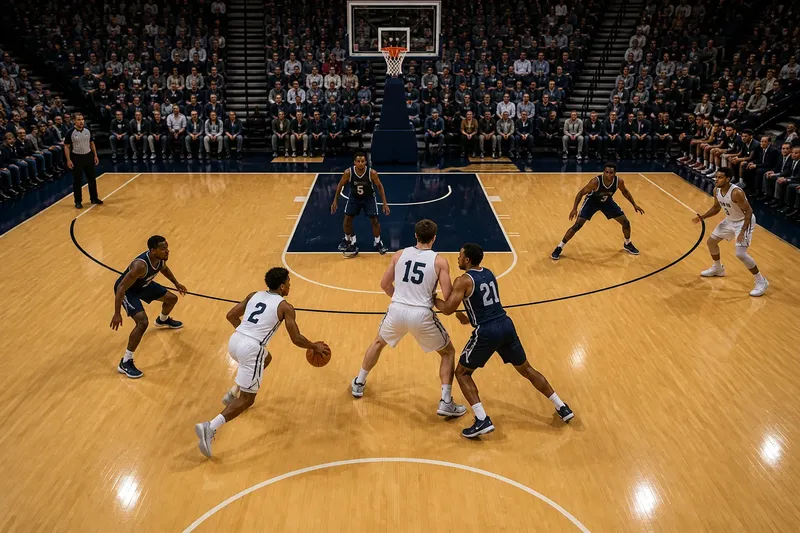
Why does a basketball screen create a driving lane, a passing option or room for a shot? A basketball screen puts the ball handler’s defender and the screener’s defender under pressure from the same action, so their separate assignments have to work together.
Watch those two defenders rather than following the ball alone. Their movements reveal what the offence is trying to create, including openings that last only briefly.
Track the paired defenders
Identify the defender guarding the ball handler and the defender responsible for the screener. Before the screen arrives, each has a clear assignment. As the ball handler approaches, one must work around the screen while the other decides whether to help.
The ball defender might go over the screen, squeeze through the space beside it or trail behind. The screener’s defender might stay near the basket, step towards the ball or move across to contain a drive. The defence’s coverage and the players’ positions shape these choices.
Notice whether the defenders switch assignments, keep their original match-ups or briefly leave an attacker free. The screen’s tactical effect comes from how their responses fit together, not from contact alone.
Read the ball defender
The ball handler’s defender must stay close enough to contest a shot or impede a drive without running into the screener. Going over can preserve pressure on a player who might shoot from outside, but it may leave the defender trailing. Going under offers a shorter route back, though it can give the attacker room to shoot.
A defender may also squeeze through the narrow space between screener and ball handler. That can limit the attacker’s head start, but it requires precise movement. If the defender gets caught behind, the handler may turn the corner with a temporary advantage.
Watch the handler’s pace and angle. A tight, quick turn around the screener can make the defender’s route awkward; a wider approach may give the defender time to recover. The handler is using the screen to shape the defender’s route, then looking for the space that opens.
Read the screener’s defender
The screener’s defender has to decide how much attention to give the ball. Staying near the basket can protect against a drive and the screener’s roll, but may leave the handler room to shoot or advance. Stepping towards the ball can slow the drive, while giving the screener a route behind the defender.
Teams can switch, with the defenders exchanging attackers. They can also show briefly at the ball and recover, or keep the screener’s defender closer to the basket. These are options rather than fixed rules; coverage may change with the players and their position on court.
Watch the screener’s defender’s feet and distance from the ball. A defender who advances has committed attention to the handler; one who stays back is conceding a different kind of space. The next dribble or pass often makes the priority clearer.
Spot the available space
The offence wants to make the defenders’ choices difficult to reconcile. If one steps out to stop the ball while the other trails behind, the handler may find a lane. If the screener’s defender stays back while the ball defender goes over, the handler may have room for a pull-up shot.
The opening may be a moment rather than a clear patch of floor: one dribble before help arrives, or a passing angle that appears and closes quickly. The advantage can be time as much as space.
Think of it like two people trying to carry a table through a narrow doorway: each must adjust to the other’s position. On court, the defenders are not simply blocking one another; they have to coordinate while keeping track of two attackers. The offence looks for the opening their different responses leave.
Follow the screener’s move
After setting the screen, the screener can turn towards the basket, move away from it or stay available for a pass. Turning towards the basket is often called a roll. If the screener’s defender has moved towards the ball, the roller may have a route to attack.
The handler can pass to the roller if that route is open. If the defence covers the roll, the handler may keep the ball or pass to another teammate. The action continues after the screen; contact is only one moment in a longer decision.
Notice whether the screener moves immediately or waits for the handler to draw attention. A quick roll can stretch the defence towards the basket. Moving away may pull the screener’s defender out of the lane and make room for the handler to drive. Either move matters only in relation to the defence’s response.
Watch the next helper
A third defender may step in to stop the handler or roller. That can close the first opening, but it may leave the helper’s own attacker free for a pass.
Follow the action one pass beyond the screen. If another defender leaves their assignment, look for the attacker they have left. The offence may pass to that player, who can shoot, drive or move the ball on. A screen can set off a chain of defensive decisions rather than produce an immediate finish.
Say you are watching an invented possession: the handler uses a screen near the top of the key, the screener’s defender steps towards the ball, and a wing defender moves across to protect the lane. The handler passes to the wing attacker left open by that helper. The observable result is a new chance to shoot or drive from the wing, though it does not establish that the possession will end in a score.
What should you watch?
Does a screen need contact?
No. A well-timed screen can make a defender change route without a heavy collision. Watch whether the handler changes direction around it and whether the defender has to recover.
What does switching mean?
Switching is when the two defenders exchange the attackers they guard. It can prevent the handler gaining a clear run around the screen, but may create a different match-up against the screener.
Why might the handler reject the screen?
The handler can move away if the defender is leaning towards the screen or the other route is open. That change tests whether the defenders can adjust rather than follow the expected path.
Can a screen help without a shot?
Yes. It may draw a defender out of position, open a passing lane or give a teammate room to move. The possession can benefit even if the handler never shoots.
Read the whole action
Use this sequence as you watch: locate the ball defender, identify the screener’s defender, observe both reactions, then follow the screener and the nearest helper. Ask what each defender is trying to stop and which attacker has gained room as a result.
Judge the screen by the options it creates, not only by whether the handler scores or the screener receives a pass. The defence may contain both threats and force a reset, or the screen may draw help that opens a later pass. Next time, keep your eyes on the screener’s defender just after the handler turns the corner; that pause can show whether the defence is protecting the drive, exposing the roll or inviting a pass elsewhere.